

Preventing the loss of expertise in industrial maintenance: a crucial challenge for long-term survival
The loss of expertise is a lasting threat to industrial companies, particularly in the maintenance professions. The transmission of knowledge, often integrated through the transfer of skills between generations, is at the heart of prevention strategies. Faced with the retirement of experienced technicians and the increasing use of new technologies, ongoing training is a priority. In addition, enhanced and accessible technical documentation is becoming an essential pillar in preserving the memory of equipment and procedures.
To structure this prevention, organizations adopt rigorous methods aligned with suitable tools. Optimized knowledge management ensures a smooth flow of information, avoiding critical knowledge gaps. These approaches, integrated into the day-to-day work of teams, facilitate the implementation of an effective and pragmatic succession plan, guaranteeing operational continuity.
Combining mentoring and digital tools to strengthen skills transmission
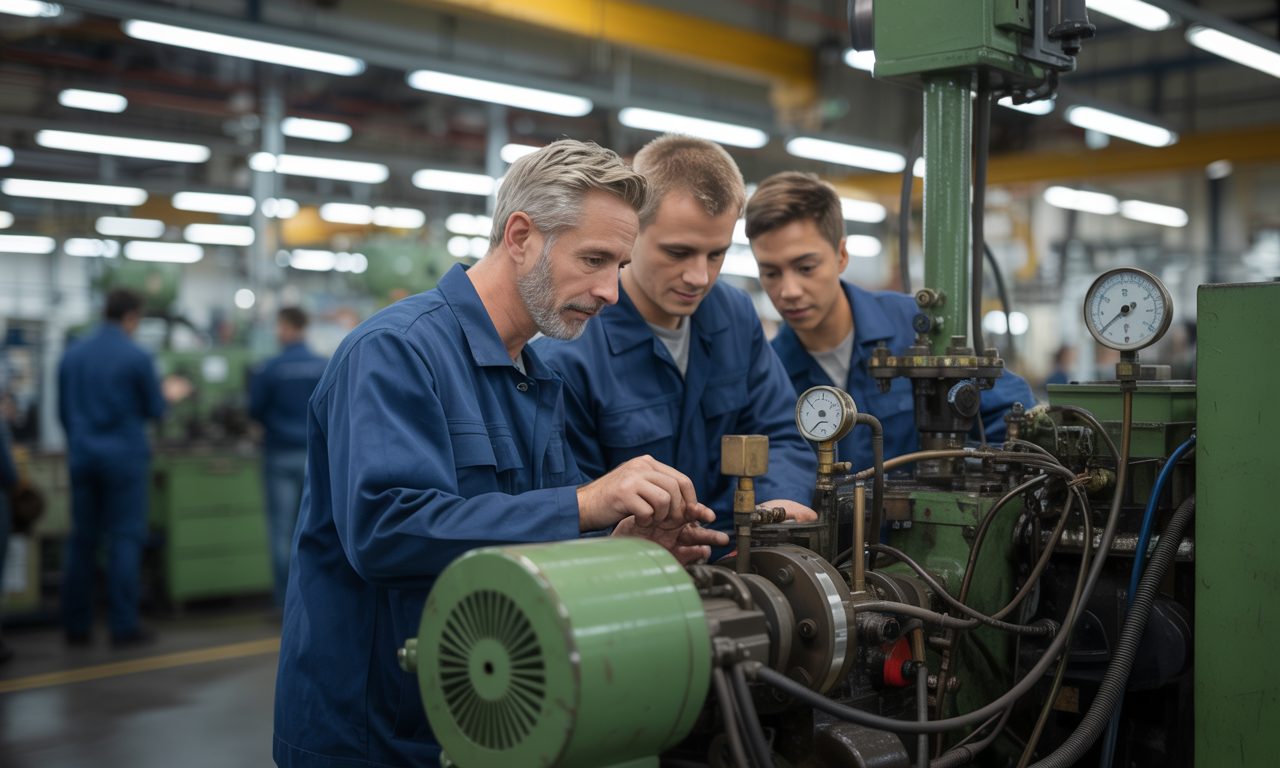
Intergenerational mentoring is a powerful lever for preventing the loss of expertise. By pairing up experienced technicians with young recruits, the transfer of know-how is accelerated and made more secure. This personalized support, complemented by the provision of structured technical resources, guarantees rapid and lasting appropriation of practices.
The integration of a SaaS community management platform, such as alumni.space, also facilitates the animation of internal professional networks. Between profiles, events, job offers and sharing spaces, these tools encourage commitment, cooptation and skills enhancement. Such a platform industrializes a process that was previously managed in a fragmented, multi-tool or spreadsheet-based way, reinforcing the traceability and durability of expertise capital.
Optimizing maintenance practices to limit loss of expertise
Industrial maintenance, combining preventive, corrective and predictive maintenance, requires rigorous skills management. Predictive maintenance, which relies on the use of data to anticipate failures, requires both technical and analytical profiles, whose expertise is difficult to replace. A wealth of up-to-date technical documentation, coupled with an appropriate CMMS system, is essential.
One method that stands out is reliability-based maintenance (RBM). This systematic approach targets strategic equipment and determines a suitable schedule for each maintenance plan, helping to avoid random interventions and the dispersal of technical knowledge. This rigorous planning, underpinned by continuous monitoring and follow-up, not only secures the function but also encourages the development of skills.
The use of a high-performance CMMS like the one presented by Altair Enterprise perfectly illustrates the role of digital technologies in process control. Centralization of requests, prioritization of tasks, archives and indicators are all tools that optimize equipment life and limit the impact of knowledge loss.
Training teams to anticipate the skills of tomorrow
The rapid renewal of industrial technologies makes ongoing training essential to prevent the risks associated with obsolete skills. Adapting programs to the real needs of companies requires close collaboration between trainers and employers, favoring a personalized approach, as proposed by the Fab’Academy.
Targeted training, through the analysis of critical skills, helps to anticipate talent shortages. These paths also include the development of the interpersonal skills essential to team management and effective knowledge sharing. The success of this strategy hinges on a clearly defined succession plan, supported by indicator monitoring and an integrated HR policy.
Supporting talent management by mobilizing networks and social innovation
Mobilizing communities of former employees, ambassadors and experts helps energize intergenerational ties. The lasting commitment induced by this type of initiative facilitates the recruitment of suitable profiles and supports co-optation to strengthen maintenance teams. A dedicated collaborative platform such as alumni.space supports these initiatives throughout the career cycle.
By encouraging the regular sharing of experience and best practices, these networks create “clinics” for the loss of expertise, where solutions are co-developed to meet the specific challenges of each business. These participative principles, combined with digital tools, produce considerable gains in terms of time saved, costs avoided and stakeholder satisfaction.