
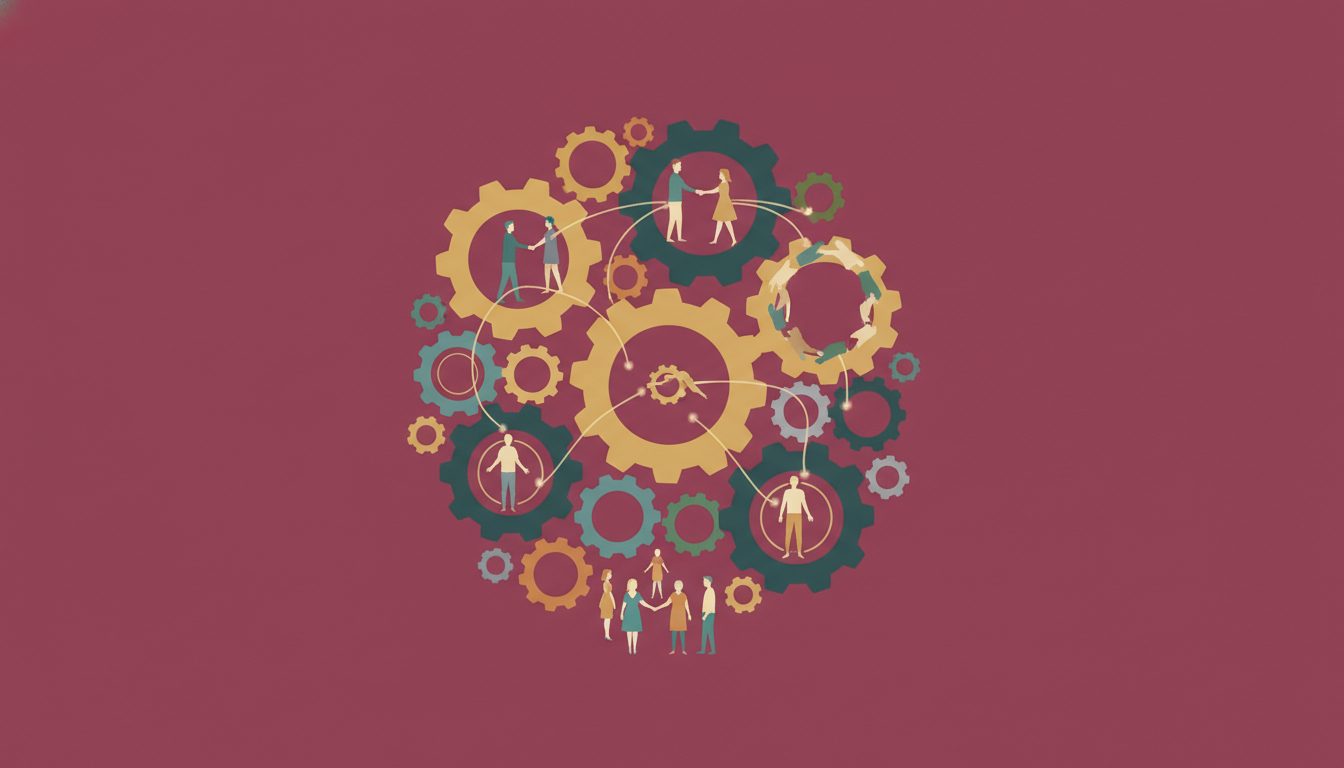
In a nutshell: the transfer of technical skills in industry is becoming a hot topic at a time when retirements are accelerating and artificial intelligence is reshaping production professions. Here are the key points to bear in mind when structuring a sound approach:
- 301,000 experts retire in France every year, taking with them know-how that is often tacit.
- 80% of industrial knowledge remains unformalized and lodged in the heads of experienced employees.
- 67% of industrial companies are struggling to recruit qualified production and maintenance staff.
- Structured industrial mentoring, coupled with digital documentation, cuts the time it takes to get up to speed by 25%.
- AI and augmented reality open up new ways of capturing, retaining and disseminating expertise in the field.
Skills transfer in the industrial sector: a vital challenge for production
The transmission of technical skills in the industrial sector involves capturing, formalizing and disseminating the know-how held by experienced operators, technicians and engineers in order to secure industrial production. This structured approach combines documentation, industrial mentoring and digital tools to preserve the capital of experience in the face of retirement and the transformation of professions.
At a precision engineering plant in the Arve Valley, the departure of an experienced setter brought three machines to a standstill for six weeks. No-one had mastered his specific settings. This situation, unfortunately commonplace, illustrates the fragility of industrial organizations that have not anticipated the circulation of their critical knowledge.
The age pyramid is weighing heavily on workshops. Over-50s now account for more than a quarter of the French workforce, and industry is one of the sectors most exposed to this demographic phenomenon. When a senior technician leaves, it’s not just arms that are missing, but decades of intuition, insight and little tricks that don’t appear in any manual.
The challenge goes beyond operational continuity. Good knowledge management enhances product quality, secures certifications, facilitates the integration of newcomers and feeds continuous improvement. Conversely, neglecting knowledge transfer can lead to rejects, late deliveries and lost margins. Industrial managements have understood this: organizing the handover is no longer an HR option, it’s a strategic act.
The hidden cost of lost technical expertise
When critical know-how disappears, the bill is rarely quantified, but always hefty. Poorly executed repairs, machine settings to be redone, lost customers unable to fill a special order: the bill quickly climbs. A survey of European manufacturers estimates that the loss of a technical expert costs between 1 and 3 times his or her annual salary over the following two years.
This phenomenon particularly affects SMEs. With tightly-packed teams, the slightest prolonged absence weakens the organization. Securing the digital transfer of skills to avoid the loss of skills becomes an operational priority, not a luxury.
Mapping critical knowledge before taking action
Before launching a transfer plan, it’s important to know what to transfer. Not all skills are created equal. A skill becomes critical when it has a direct impact on production, remains rare on the job market and helps differentiate the company from its competitors.
A methodical audit of expertise enables priorities to be set. Thisknow-how audit and prioritization approach avoids spreading efforts over secondary skills while the most strategic ones remain vulnerable.
Mapping technical know-how: the method for identifying critical production skills
Mapping technical know-how means drawing up a precise picture of the expertise present in the company, identifying who holds what, at what level and with what degree of criticality. This mapping serves as a compass to guide professional training, mentoring and documentation initiatives.
The method involves four steps. We start by listing the key production processes. For each process, we identify the skills required and the people who possess them. We then assess each employee’s level of mastery. Finally, we cross-reference this data with operational criticality to pinpoint areas of weakness.
| Technical skills | Owners | Level of formalization | Production criticality | Replacement time |
|---|---|---|---|---|
| 800T hydraulic press adjustment | 1 senior setter | Low | Very high | 6 to 9 months |
| Stainless steel TIG welding | 2 qualified welders | Average | High | 4 to 6 months |
| Siemens PLC fault diagnosis | 1 maintenance technician | Low | Very high | 8 to 12 months |
| Assembly line control | 6 operators | High | Moderate | 2 months |
| Dimensional quality control | 3 controllers | High | Moderate | 3 months |
This grid immediately reveals the red zones. In the example above, press setting and PLC diagnostics are at maximum risk: unique skills, poorly documented, time-consuming to reconstitute. It is precisely these jobs that should be the focus of a priority transmission plan.
Organizations wishing to go further can draw on the methods described in this guide to map critical skills and structure their approach.
Distinguishing between explicit skills and tacit knowledge
The classic trap is to be content with the visible skills listed on job descriptions. However, the essential is often hidden in tacit knowledge: those gestures acquired through repetition, those reflexes developed in the field, those tricks of the trade that make a machine purr instead of rumble. Capturing this tacit knowledge requires appropriate methods, based on observation, storytelling and analysis of practice.
While filming a 58-year-old mechanic during his work, an agricultural equipment manufacturer discovered that he was using a specific engine sound as a tuning indicator. No technical data sheet mentioned this detail. Yet this auditory cue saved three hours of diagnostic time per intervention.
Industrial mentoring and tutoring in production: creating effective intergenerational pairs
Industrial mentoring is based on a structured relationship between an experienced expert and an employee who is in the process of upgrading his or her skills, as part of an organized and measurable on-the-job training program. This practice is the most powerful lever for transferring complex technical know-how that resists simple documentation.
Unlike one-off tutoring, mentoring is a long-term process. It combines technical support, cultural transmission and professional development for the mentee. The intergenerational pairing thus becomes a genuine forum for exchange, where the senior shares his or her expertise, while the junior brings a fresh perspective, new questions and, sometimes, invaluable digital skills.
Several French manufacturers have successfully implemented this approach. One SME specializing in the machining of aeronautical parts deployed an 18-month pairing program, supervised by a transmission referent. The result: 12 critical skills secured, a measurable increase in the autonomy of juniors, and a retention rate for new recruits rising from 65% to 89%.
The ingredients of a successful mentoring program
An industrial mentoring program can’t be improvised. A few pillars guarantee its success:
- A clear framework: objectives defined, duration specified, evaluation milestones scheduled.
- A well-considered match: compatible personalities, complementary profiles, voluntary commitment on both sides.
- Mentor recognition: symbolic or financial recognition, inclusion in annual appraisals.
- Monitoring tools: logbook, regular meetings with an HR consultant, shared indicators.
- A community dimension: meetings between mentors, sharing of practices, sense of belonging to a network.
Mentoring as a lever for skills development goes beyond the purely operational. It fosters commitment, enhances the expertise of senior employees and accelerates the integration of new recruits.
Reverse mentoring: juniors train seniors
Reversing roles may come as a surprise, but the idea is gaining ground on the shop floor. Young operators, at ease with tablets, CMMS software or 4.0 control interfaces, help their elders to get to grips with the new digital tools. This reverse mentoring creates a valuable dialogue: the senior passes on his business expertise, the junior shares his technological fluency. Everyone wins, and team cohesion is strengthened.
Digital tools and AI for industrial knowledge management
Digital tools are radically transforming knowledge management in industry, enabling know-how to be captured, structured and disseminated on a massive scale. Artificial intelligence, augmented reality and collaborative platforms now offer concrete alternatives to dusty filing cabinets and never-before-read procedures.
Knowledge capture is changing face. Filming an operator during an intervention, automatically transcribing his oral explanation, structuring information thanks to AI: what used to take weeks to write is now done in a matter of hours. This acceleration makes documentation finally realistic for often overworked field teams.
Intelligent knowledge bases go a step further. Rather than searching for a document in a shared folder, the operator poses a question to a virtual assistant, who draws from the entire document pool. The response is contextualized and usable in a matter of seconds. Industrial maintenance in particular benefits from this logic: faster diagnosis, easier troubleshooting, greater team autonomy.
Augmented reality and immersive training on production lines
Augmented reality superimposes virtual information on the real working environment. An operator looks at a machine through a tablet or connected glasses and instantly visualizes control points, intervention sequences and reference values. Learning becomes contextual, anchored in the real gesture. This approach drastically reduces errors during the first few weeks on the job, and accelerates autonomy.
An automotive supplier in the Rhône-Alpes region has deployed virtual reality training modules for wiring complex harnesses. Qualification time for new operators has been cut from 14 to 6 weeks, with product quality immediately at the expected level.
Community platforms and link continuity
Beyond technical tools, an alumni community and mentoring platform extends the company’s responsibility beyond the employment contract. It transforms retirements into transitions, maintains an active link with alumni, and capitalizes on their experience for future generations. This approach goes beyond simple HR logic to address CSR issues: transmission, intergenerational inclusion, support for employability, skills volunteering.
The benefits can be measured on several levels. The employer brand gains in authenticity thanks to testimonials from former employees. Recruitment benefits from an active co-optation pool. Continuity of knowledge is organized thanks to retired mentors who occasionally agree to answer technical questions from their successors. Impact indicators (hours of mentoring, participation in events, documentary contributions) align HR, CSR and communication.
Anticipating retirements and structuring a sustainable succession plan
Anticipating retirements involves identifying the employees concerned over the next 24 to 36 months, assessing the criticality of their skills and triggering a progressive handover plan before the official deadline. This anticipation is the decisive factor that separates a successful transition from an organizational crisis.
The scenario to be avoided is well known: the departure is announced three months before the date, no one has really prepared the succession, the knowing person leaves with his boxes and the team is left bereft. On the other hand, a structured plan covering 18 to 24 months enables the transfer to be organized with serenity.
There are several steps to successful anticipation. First, identify foreseeable departures using an annually updated age pyramid. Next, cross-reference this data with the mapping of critical skills to identify priority pairs. Then build a personalized skills transfer plan with milestones and indicators. Finally, secure the senior employee’s commitment, sometimes by arranging part-time work or a post-retirement mentoring assignment.
Rituals that make a difference over time
A transmission plan is held together by regular rituals, not by intentions. Here are some tried-and-tested practices:
- Weekly update for pairs: 30 minutes to review the week’s learning.
- Shared logbook: the mentee documents what he discovers, the mentor comments.
- Monthly review with the manager: course adjustments, identification of sticking points.
- Quarterly assessment: formal validation of acquired skills on a shared grid.
- Final capitalization: production of a documentary deliverable that joins the knowledge base.
These rituals look simple on paper. But implementing them requires discipline and strong managerial sponsorship. Without visible hierarchical support, transmission quickly takes second place to day-to-day emergencies.
When the company can’t do everything itself
Some situations go beyond internal capabilities. Highly specialized skills, the mass departure of a generation, the complete restructuring of a workshop: external support can make the process more secure. A specialized consultant or a former employee mobilized via an alumni platform can support the formalization of processes and methodological transfer. This combination of internal resources and external expertise is particularly relevant for SMEs.
Other sectors share these issues, albeit with their own specific characteristics. Feedback from theenergy industry and skills transfer, or from the transport and logistics sectors faced with the drain of key skills, provides valuable insights for adapting one’s own approach. To go a step further, the question of how to anticipate the loss of skills due to retirement merits in-depth reflection at the level of each industrial department.
The industrial sector is entering a pivotal decade. Companies that know how to organize the circulation of their technical know-how, combine human mentoring with intelligent digital tools, and create a genuine learning community beyond the boundaries of the contract, will take a lasting lead. Transmission is no longer a matter of individual goodwill: it’s a strategic project that can be piloted, measured and celebrated.