
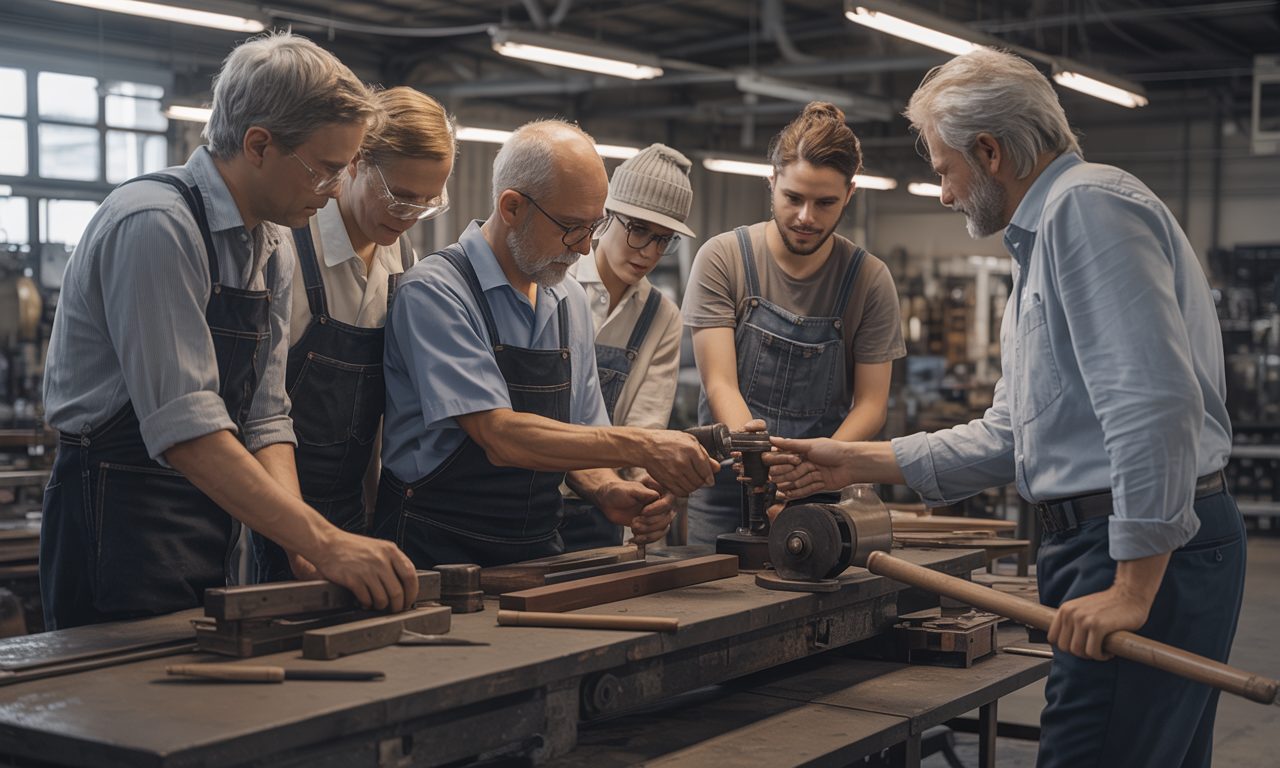
Preserving the unique know-how of industrial craftsmen: a strategic challenge
The know-how of industrial craftsmen represents a fundamental industrial heritage, combining tradition and innovation. Faced with the challenges of globalization and digital transformation, ensuring the transmission of skills is vital to maintaining the quality of craftsmanship and fostering sustainable development in industry. These trades, often characterized by precise traditional techniques, require ongoing commitment to avoid the irreversible loss of expertise accumulated over several generations.
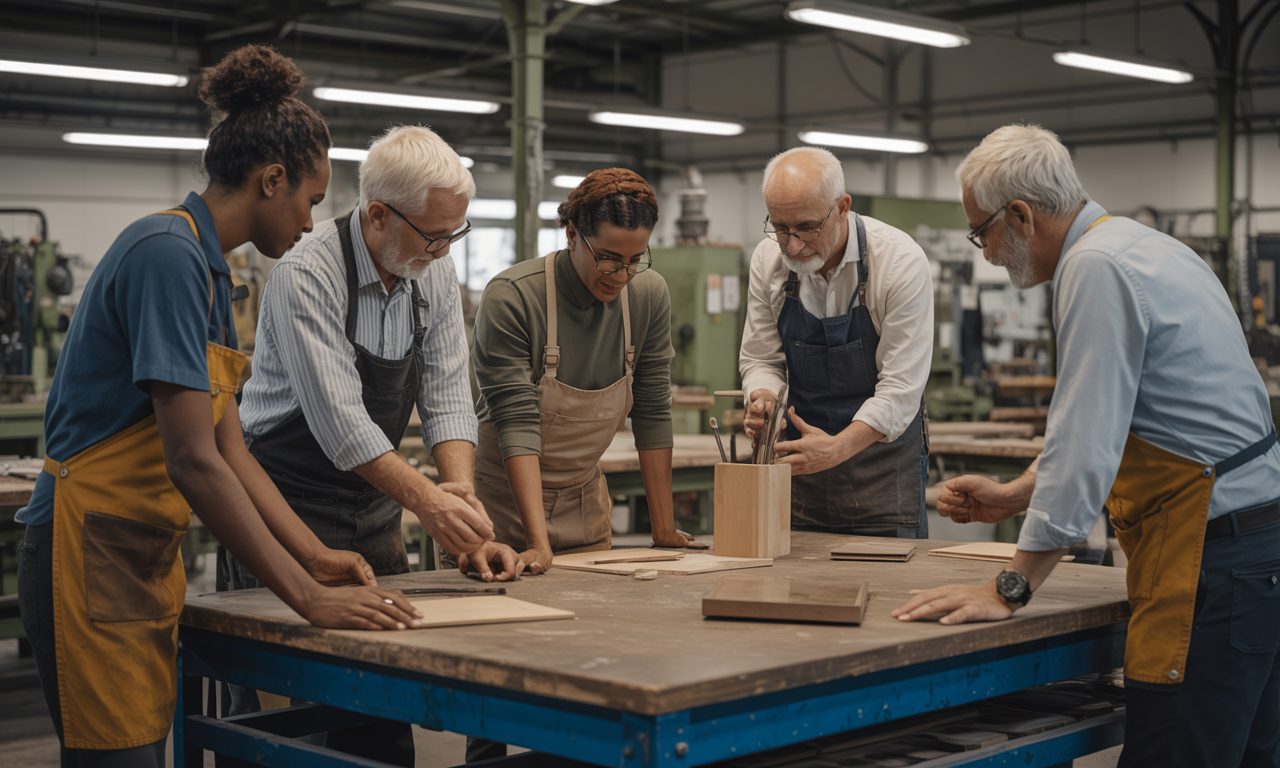
Risks associated with the loss of craft skills in industry
The gradual disappearance of experienced industrial craftsmen brings with it a major risk: the dilution of industrial heritage. This phenomenon has a direct impact on product quality, and hampers innovation by craftsmen, given the complexity of technical gestures, which are not always documented. In a context where vocational training is struggling to integrate appropriate curricula, many industrial SMEs are seeing their processes weakened by a break in the continuity of knowledge.
And these losses are not just internal. They also affect a company’s image and competitiveness, while increasing costs linked to equipment quality and maintenance. Setting up tools for managing and animating communities between old and new employees is therefore a valuable strategy for effectively managing this capital of experience.
Tried-and-tested methods to guarantee the transmission of artisan know-how in an industrial environment
The organization of a structured handover process is based on a clear definition of roles and responsibilities, as well as a precise timetable and appropriate rituals. The co-opting of mentors from the community of former employees helps to strengthen the link between generations and optimize learning in pairs. This approach also helps reduce staff turnover and encourages long-term commitment.
Integrating a SaaS platform dedicated to managing communities of craftsmen and experts facilitates the management of these actions, by centralizing profiles, offers, content and collaborative projects. By automating certain steps, decision-makers save time and improve compliance in the management of sensitive skills.
Application example: an intergenerational self-help network
An industrial company in the mechanical sector recently set up a mentoring program using a digital platform. Senior craftsmen share their expertise in traditional techniques while coaching young recruits. This initiative has helped to better integrate new teams, enhance the value of craftsmanship and reinforce a corporate culture focused on preserving industrial heritage.
This implementation highlights the fact that organizational memory management, combined with regular events and an in-house job board, helps to consolidate professional identity while stimulating innovation and sustainable development.
Structure and manage community activities to perpetuate experience capital
The governance of these networks is based on precise KPIs, measuring the adoption of tools, the number of active pairs, and qualitative feedback on transmission. This structured approach encourages regular monitoring and rapid corrective action.
Adopting a fine segmentation of profiles – industrial craftsmen, in-house trainers, CSR experts – helps define appropriate development paths and maximize the impact of exchanges. Centralized management via a single platform avoids the scattering of data and reduces the operational costs associated with the use of multiple, disparate tools.
HR decision-makers, CSE managers and technical school directors all benefit from a complete digital environment to encourage participative dynamics, guaranteeing the continuity and enhancement of industrial know-how.
Find out how a SaaS platform facilitates the preservation of artisanal know-how and makes a concrete contribution to the protection of this intangible capital.
Effective management of industrial know-how requires innovative solutions adapted to contemporary challenges, particularly in sectors faced with high levels of technicality and increasing quality requirements.