

In this article:
The wine industry faced with demographic challenges and the age pyramid
The winegrowing industry is currently facing a major challenge: the pronounced ageing of its workforce. With a high rate of retirements and insufficient generational renewal, the demographic structure of winegrowers is becoming an obstacle to the future of the vineyard. This discrepancy threatens the transmission of know-how and undermines the continuity of operations.
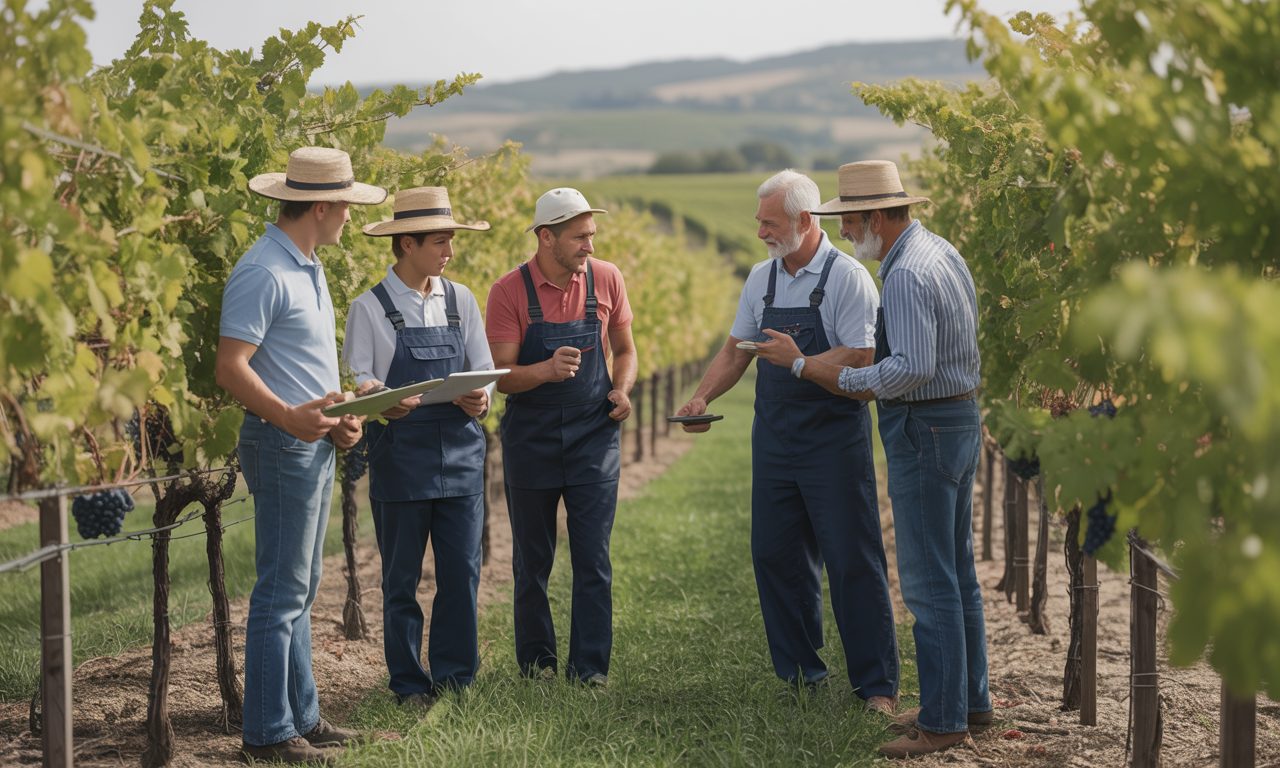
A limited number of young winegrowers in the face of an aging population
The wine industry’s major operators are well on the way to retirement. This ageing population is not always finding takers among the younger generation, whose interest in the profession is evolving and concentrating on smaller volumes or different consumption patterns. This affects generational renewal, accentuating the asymmetry of the age pyramid.
Newcomers generally prefer light sparkling or rosé wines, which are less demanding in terms of volume than traditional red wines. As a result, the pressure on family farms is increasing, particularly in difficult areas where the return on investment seems uncertain. This situation reflects an imbalance that could prove critical to the long-term management of terroirs.
Passing on know-how and capital: a crucial challenge for the wine industry
The gradual disappearance of experienced operators implies a significant risk of losing experience and skills. Effective transmission and mentoring processes are therefore essential to ensure continuity. The challenge is to put in place strategies to optimize the co-option and integration of young winegrowers, while maintaining excellence in practices.
The digitization of exchanges and the structured management of professional communities play a key role in this context. SaaS platforms dedicated to network management, such as this solution, help to monitor and anticipate changes in the age pyramid. They also facilitate information sharing and ongoing training between generations.
How is the wine industry adapting its governance to the age pyramid?
Faced with this complex demography, decision-makers need to rethink governance and the way in which farms are run. Community spirit needs to be reinforced, with greater commitment from all players to limit the loss of knowledge and encourage intergenerational links. Through precise indicators and regular monitoring, it becomes possible to adopt measures adapted to the field.
Crédit Agricole, a major partner of the sector, actively supports these dynamics. In particular, it is helping to alleviate the cash-flow problems of farms in difficulty, thereby facilitating their transition and preparing for retirement. This approach is complemented by a grubbing-up plan financed to the tune of 120 million euros, giving professionals the leeway to adjust their cultivated areas strategically.
Innovative initiatives to anticipate departures and support renewal
To ensure the next generation of winegrowers, the industry can rely on community development programs that bring together experienced mentors and young winegrowers. These practices help to reinforce the sense of belonging and mobilization around the profession. The development of specialized content, targeted events and mentoring programs are operational responses to the demographic crisis.
Human resources teams, particularly in training organizations, use high-performance tools to anticipate changes in the workforce and establish support rituals. This method not only accelerates professional integration, but also reduces the risks associated with unanticipated departures.
The future of the vineyard: managing generational transition through technology and networks
Controlling the age pyramid inevitably requires rigorous management based on appropriate key indicators. Knowing the precise distribution of the workforce, measuring the rate of farm transfers and analyzing the profile of new entrants are fundamental steps. This approach secures governance and reduces the hidden costs associated with the loss of skills or the poor integration of young people.
It is essential to industrialize these processes through a single, collaborative platform. The multiplication of dispersed tools results in a significant loss of time, and slows down the long-term commitment of the players involved. Human resources professionals confirm that centralizing data optimizes management and facilitates strategic decision-making, particularly for the wine industry.