
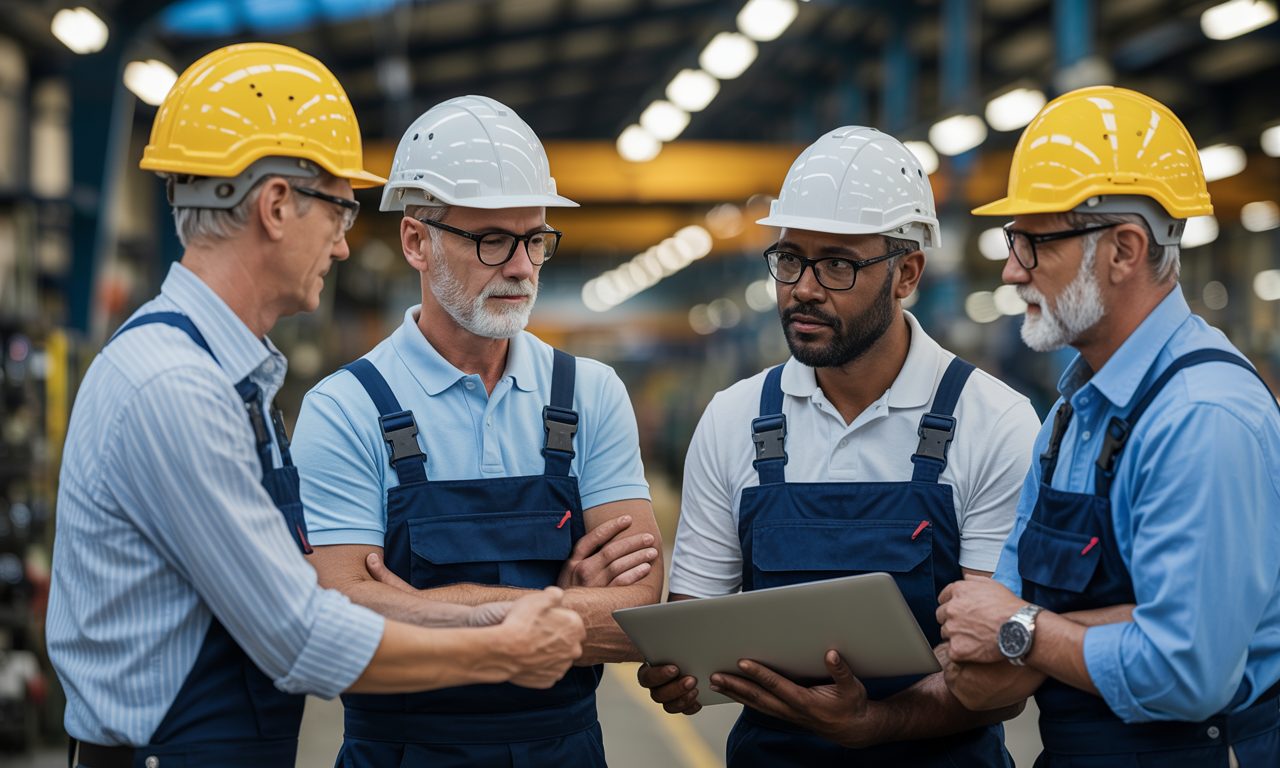
Securing industrial knowledge: a key issue before operators leave the company
In the industrial sector, the loss of know-how when operators leave represents a major operational challenge. This capital of experience, often tacit and difficult to formalize, comes from years of practice and expertise in the field. Without structured management, this loss has direct consequences: longer downtimes, lower quality, critical dependence on certain experts. Securing knowledge thus becomes essential to preserve the performance and continuity of industrial companies.

Risks related to the loss of knowledge among operators before their departure
Retirements and turnover are intensifying in industrial companies, accentuating the erosion of operational knowledge. More than 80% of this knowledge is tacit, held by a small number of experts. In the absence of structured knowledge transfer, factories suffer from a proliferation of unanticipated breakdowns and an increase in breakdown times. This has a direct impact on internal skills management, generating hidden costs as the company’s technical memory is eroded.
A typical case involved a production line that was shut down for several hours due to the absence of a senior technician who knew the intricacies of the process. A situation that could have been avoided if knowledge capitalization had been implemented proactively.
Effective strategies for preparing knowledge transfer before departure
Preparing for retirement requires an organized strategy combining observation, formalization and in-house training. Knowledge transfer often requires a process spread out over time, starting several months before the operator’s actual departure.
The first step is to identify critical skills and tacit knowledge, often invisible in conventional technical documentation. Shadowing, supplemented by explanatory interviews, facilitates the successor’s gradual rise to competence. This process needs to be structured with appropriate timetables to avoid rushing and ensure complete learning.
A collaborative platform for optimized skills management
The use of community management platforms, such as alumni.space, is revolutionizing the way in which industrial knowledge is secured. These tools centralize profiles, content and procedures, and facilitate the creation of mentor-mentee pairs, promoting active intergenerational transfer.
This digital infrastructure makes it possible to track changes in skills, document feedback and orchestrate ongoing in-house training. It also fosters the maintenance of post-departure links through remote exchanges, reinforcing the commitment and durability of the network.
Transforming informal knowledge into a lasting digital asset
One of the keys to securing knowledge over the long term lies in converting tacit knowledge into explicit, accessible content. This requires a variety of media, combining enriched documents, demonstration videos, annotated photos and practical guides with expert commentary.
Audiovisual captures reinforce the transmission of skills and subtle reasoning, invaluable for avoiding the repetition of errors and improving industrial quality. They constitute a living repository that is continuously fed by the teams, preventing the capital of expertise from remaining the prisoner of individuals.
An asset for the performance and resilience of industrial companies
Securing knowledge reduces unforeseen interruptions, cuts troubleshooting time and optimizes skills management by reinforcing versatility. This approach reduces the cost of external expertise and secures the governance of human capital.
By providing the organization with a reliable, actionable operational memory, it also facilitates the adoption of new processes and technologies, thus contributing to the agile management of the industrial enterprise.